NFL Betting in the UK: How the UKGC, Statutory Levy and 2026/27 Tax Reform Reshape the Market
 Available in US
Table of Contents
- The question that comes every September
- Is NFL betting actually legal in the UK
- What the UKGC actually does to your NFL account
- How big is UK NFL betting really
- The pre-2026 tax regime, in one diagram
- The statutory levy and the £5 stake cap
- Why the unlicensed market is shrinking
- What this all means for your NFL season
- Frequently Asked Questions

The question that comes every September
I’ve spent seven years watching UK punters fumble the same regulatory questions every September. The phone call from a mate who’s just discovered American football. The text from a stag-do group asking whether Sky Bet’s NFL prices count as proper UK gambling or some grey-market Vegas import. The question my old neighbour asked at the pub last autumn — “If I win on the Chiefs spread, do I have to ring HMRC?”
Short answer: no. Slightly longer answer: NFL betting in the UK sits squarely inside the same regulated perimeter as a Saturday afternoon football coupon. The same regulator, the same player-protection rules, the same statutory levy, the same fractional pricing on most apps. The wrinkle is that the perimeter itself is moving. Two duty rises are coming through HMRC, stake caps already apply to adjacent online verticals, and the UKGC has been busy taking offshore listings off Google. None of that changes whether you can place a punt on Sunday Night Football from Manchester. It changes what the operator pays in tax, what the regulator can do when an unlicensed site appears, and how much friction shows up in your account when you try to deposit £400 in a week.
Stay safe with UKGC safer gambling guidelines for NFL punters.
Is NFL betting actually legal in the UK
The first thing I check when somebody asks whether NFL betting is “actually legal” in Britain is whether they have an Android phone, a debit card and a postcode. If yes, the answer’s been yes since 2007, when the Gambling Act came fully into force and the UK switched to a “remote operator pays at point of consumption” model. NFL is not treated as a separate category from any other sporting event under that Act. A spread on the Bills at Spurs is the same regulatory animal as a 10/11 price on a Premier League corner count.
That regulatory uniformity matters because UK punters often arrive at NFL betting through the assumption that American sport is somehow “foreign” — that the league’s American jurisdiction infects the bet itself. It does not. What infects the bet is whether the operator taking your stake holds a remote licence from the UK Gambling Commission. If they do, every protection that applies to a Premier League moneyline applies to a Sunday-night totals punt: KYC at registration, the National Self-Exclusion Scheme GAMSTOP, deposit and time limits on demand, and the right to dispute through an approved ADR provider. If they don’t, you’re outside the perimeter — and that’s where the problems live.
A few realities worth fixing in your head. NFL winnings are not taxed in the hands of the punter; that’s been settled UK policy since 2001 and the duty reforms of 2026 and 2027 do not change it. Cryptocurrency bookmakers advertising “NFL specials” on social media are almost never UKGC-licensed, regardless of how British their marketing looks. Prediction markets such as Kalshi and Polymarket, which let users buy yes-or-no contracts on game outcomes, are not licensed gambling products in the UK and sit in a contested grey area that the Commission has been signalling about for two years. And no, you do not need to be a member of the British American Football Association, Sky Sports or any other body to bet — your operator account is the only credential that matters.
What the UKGC actually does to your NFL account
In the year to March 2025 the UKGC sent more than 102,000 URLs to Google for delisting and pushed 264 sites into full closure. That’s not a regulator dabbling at the edges of an industry — that’s an enforcement infrastructure that operates closer to the cybercrime end of policing than to a sleepy licensing office.
The UK Gambling Commission is the single regulator any NFL operator must satisfy to take a legal bet from a punter physically located in Great Britain. The architecture is straightforward in principle. Section 33 of the Gambling Act 2005 makes it an offence to provide facilities for gambling without a licence. The Commission grants remote operating licences in categories — General Betting (Standard), Real Event included — that cover American football the same way they cover golf or rugby league. Every bookmaker UK punters know in the NFL context — bet365, Sky Bet, Paddy Power, William Hill, Betfair, Coral, BetVictor, Ladbrokes — holds one of these. Their account terms reference Commission rules. Their dispute machinery references ADR providers approved by the Commission.
What does the licence actually buy you as a punter? The Licence Conditions and Codes of Practice — the LCCP, in industry shorthand — define a long list of operator duties. Anti-money-laundering checks at deposit thresholds. Affordability triggers when monthly losses cross certain levels. Marketing rules that bar bookmakers from showing odds-boost promos to anyone on GAMSTOP. Customer-fund protection in the event of insolvency, ranked at one of three disclosed tiers in the operator’s terms. And, since April 2025, a statutory levy paid to fund treatment and research on gambling harm.
The numbers underneath this regulatory machine are large. The Remote Casino, Betting and Bingo sector generated £7.8 billion of gross gambling yield in the year to March 2025, with 24.4 million active accounts on the books at the end of the reporting quarter. Headline figures from the same period put gross gambling yield across the whole UK industry at £15.6 billion, the highest the Commission’s chief executive Andrew Rhodes has ever announced — a figure he set against the steady reality that, in his words, “gambling participation remains stable at around 48% of the UK adult population”. That’s the volume the Commission is policing. NFL betting is a small but visible slice inside it, and the slice is growing.
How big is UK NFL betting really
When I started in this niche the answer to “how big is UK NFL betting?” was a shrug. There’s still no published line in the UKGC reports that breaks out American football handle from the football aggregate, but the surrounding numbers have become specific enough that I can sketch the shape with reasonable confidence.
Start with the obvious envelope. Remote betting GGY in the year to March 2025 was £2.6 billion. Inside that, football took £1.3 billion and horse racing £766.7 million. The remaining £530 million or so houses everything else — tennis, golf, cricket, snooker, esports, virtuals and yes, American football. That’s the ceiling on UK NFL handle measured by gross yield: a slice of a sub-£600 million bucket. Hand-on-heart estimates from operators I trust put the NFL share somewhere in the £30 to £80 million GGY range for a full season. Not large. Growing fast.
The growth comes from two directions. One is the macro trend in UK sports betting overall. The market is projected to reach $21.32 billion by 2030 on an 11.4% compound annual growth rate, with the UK still accounting for about 11.1% of the global sports betting market by revenue. That’s against a national gambling sector that already moves £15.6 billion of gross yield each year. The other direction is the NFL itself — international games, broadcast distribution, Bet Builder integration on UK apps. The American football betting market globally is forecast to climb from $8.52 billion in 2025 to $9.5 billion in 2026 and on to $14.49 billion by 2030. The UK will not own a huge chunk of that, but the curve is steep enough that even a small share matters in absolute pounds.
So the right mental model is: a fast-growing seam inside a mature regulated industry. Small now. Real soon.
The pre-2026 tax regime, in one diagram
Operators sometimes describe the pre-2026 tax regime in a way that makes it sound complicated. It isn’t. It’s an inherited patchwork of rates that the Treasury set up over decades, each one tied to a particular product type, all of them now being levelled. Once you see the layer cake you can read the reforms.
Until 1 April 2026, here is what the operator pays on a remote NFL bet you place from London. General Betting Duty: 15% of the gross profit on fixed-odds NFL betting. Remote Gaming Duty: 21% of the gross profit on remote casino and slots — irrelevant to NFL directly but worth knowing because it’s about to spike. Pool Betting Duty: 15% on totalisator pools. Spread Betting Duty: 10% on spread betting. Financial Spread Betting Duty: 3%, the lowest rate in the table and the artefact of an old policy that classed financial spreads as adjacent to City trading rather than to bookmaking.
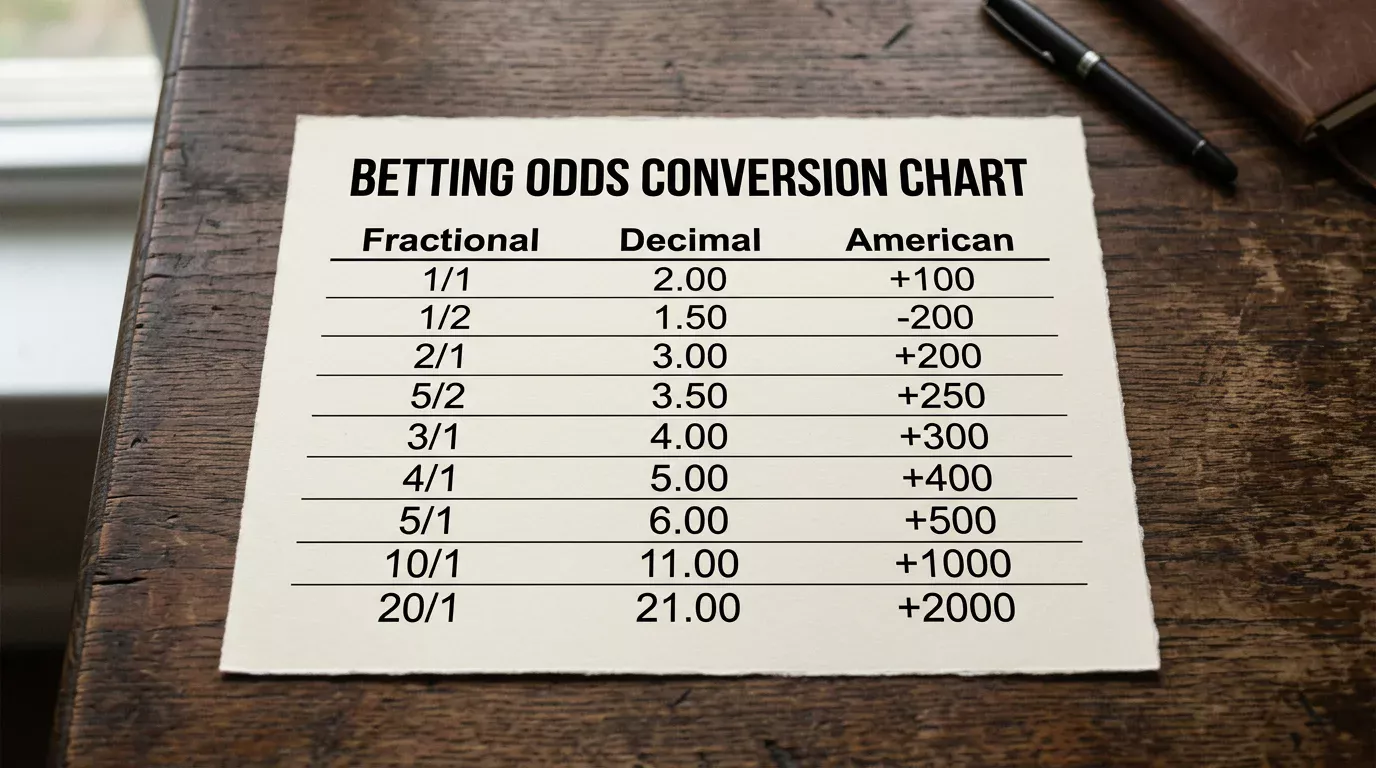
For NFL specifically, the only number that bites is the 15% GBD. When you put a fiver on the Eagles at 5/6, the bookmaker pays GBD on their take of that bet, not on your stake. Your fractional price already includes the operator’s overround, and the overround is set with the duty baked in. That’s why fractional NFL pricing in the UK has historically looked richer to the punter than a parallel American sportsbook displaying −110: the UK operator has been working with a lighter tax load on the betting side, while loading more on the casino side via the 21% RGD.
Two changes are about to flatten this picture, and they don’t arrive together. The Remote Gaming Duty rise hits first.
1 April 2026: Remote Gaming Duty almost doubles
On 1 April 2026 the Remote Gaming Duty almost doubles. The rate moves from 21% to 40% of the operator’s gross gaming yield on remote casino, slots and bingo. That is one of the largest single-day tax rises ever applied to a UK consumer industry, and although it does not directly apply to NFL betting, it changes the cost structure for almost every operator that takes an NFL bet — because the same operators sell slots, blackjack and live casino on the same accounts.
What happens when one product line in a multi-product business sees its duty almost double overnight? Two predictable things. First, the operator looks for compensating margin elsewhere. That can mean fewer NFL price boosts, narrower Bet Builder enhancements, and tighter pre-game pricing on marquee fixtures. Second, smaller operators that were marginal on the casino side reconsider their UK footprint entirely. Industry analysts have warned that the 40% rate will push some operators below the threshold at which UK remote casino is profitable. If a smaller bookmaker decides the casino numbers no longer work, they sometimes pull the whole licence and exit the UK market.
For UK NFL punters that means a leaner shortlist of bookmakers in the next two seasons, and almost certainly tighter promo budgets across the survivors. None of this is a cost you’ll see itemised on your bet slip. It will show up in the price.
The Treasury’s own modelling expects the reform package — the RGD rise plus the 2027 GBD change — to generate £810 million in 2026/27, climbing to as much as £1.16 billion by 2030/31. Those are pounds being lifted out of operator margins. Some portion will reach the punter as worse prices. It always does.
1 April 2027: General Betting Duty at 25%
The change that hits NFL betting directly arrives exactly twelve months later. On 1 April 2027 a new 25% rate of General Betting Duty applies to remote fixed-odds betting on most sports — explicitly including American football. UK horse racing is carved out and stays at 15%, which is a politically loaded distinction the Treasury justified on the basis of horse racing’s contribution to the rural economy. NFL gets no such carve-out. Neither does Premier League football, tennis, golf, cricket or rugby. From the operator’s perspective, their NFL margin tax rate jumps from 15p to 25p in every pound of gross profit.
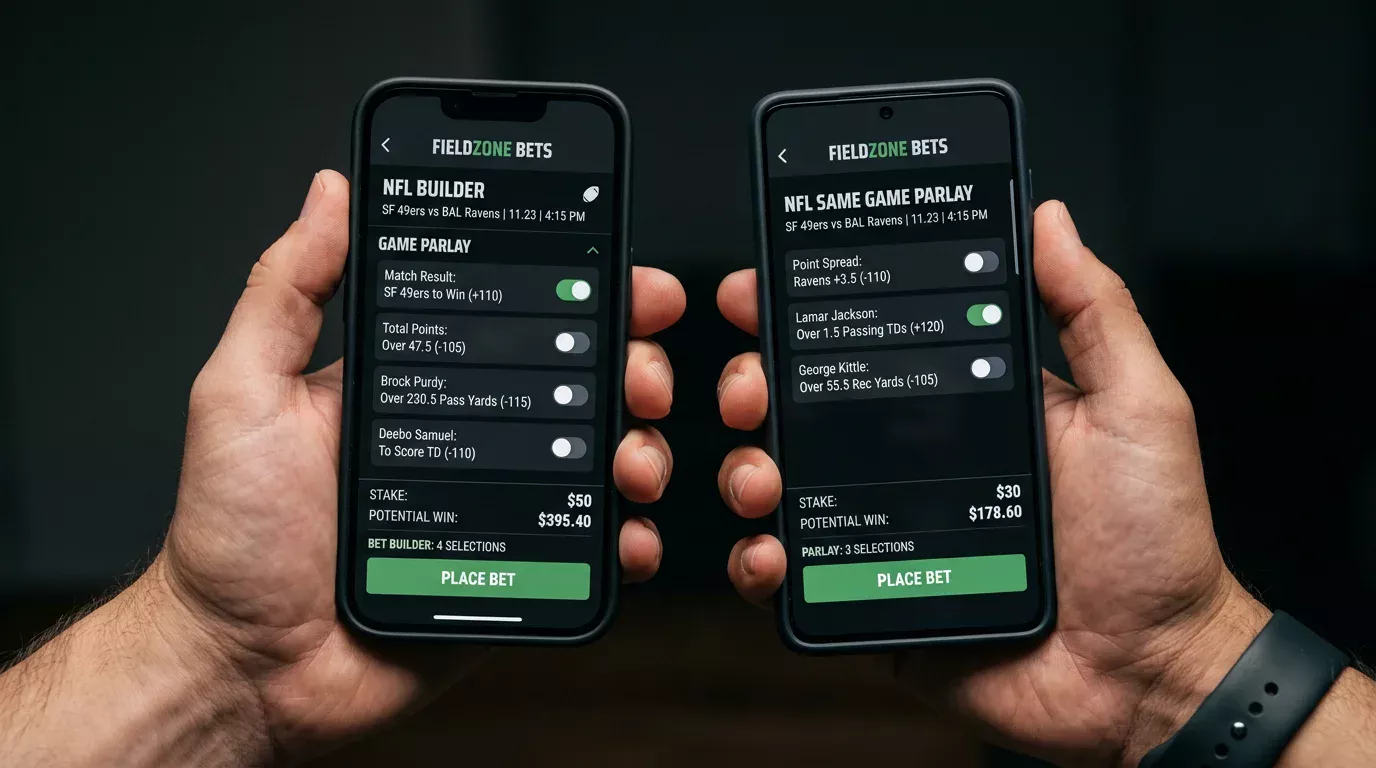
This is where the maths starts to bite the UK punter. The overround on a UK NFL spread — a -110-equivalent fractional price, give or take — is typically built so the operator pockets around 4.5% of every pound staked over the long run. At 15% GBD, the operator’s after-tax take on that 4.5% is roughly 3.83p in the pound. At 25% GBD, the same overround leaves the operator with 3.38p. That’s a chunky proportional cut, and the operator has options to defend it. They can widen the overround — say, from 4.5% to 5%, which shaves expected value off your spread bets. They can shrink boosts and acquisition promos. They can rebalance toward higher-margin Bet Builder products where the effective hold is closer to 12–15%. They will probably do all three.
The Treasury knows all of this. The Office for Budget Responsibility’s own scoring of the reform allows for behavioural change — operators absorbing some of the tax, punters churning to surviving bookmakers and to a small unlicensed market. The £810 million projected for 2026/27 and the £1.16 billion projected for 2030/31 are net of those behavioural adjustments. The reform survives the modelling. Your NFL prices, on average, will not look the same in October 2027 as they look today.
The statutory levy and the £5 stake cap
I keep a memo on my phone from last spring with the exact date the statutory levy went live: 6 April 2025. The dates matter because the rules around online gambling started shifting faster than the industry’s communications could keep up with. By the time most punters noticed the levy in their deposit confirmations, it had already been collecting for six months.
Here’s what’s in force right now. The statutory levy is a mandatory contribution paid by every UKGC-licensed operator to fund research, education and treatment of gambling harm. It replaces the previous voluntary system that the industry largely opted out of. The size is calibrated as a percentage of operator GGY, scaling by sector, and the money is administered between the Commission, NHS England and approved research bodies. From the punter’s side there is no separate deduction — the levy is paid by the operator out of their margin, in the same accounting bucket as the betting duty.
The other live rule worth knowing is the £5/£2 stake limit. From 21 May 2025, the maximum stake on an online slots spin in the UK is £5 for adults and £2 for any account holder under the age of 25. This is the first time the UK has applied an age-banded stake cap online. It does not apply to NFL betting, but it does apply to every other product on the same operator’s app, and that matters because of how account-level limits interact. If a bookmaker’s algorithms flag a punter’s casino activity for affordability, that flag follows them into the NFL section and can throttle wagering across all products. I’ve talked to punters who suddenly found their NFL deposits capped at £40 a week because a series of late-night slot sessions tripped a risk score they didn’t know existed. The same lever, the same account, the same algorithm.
A deeper unpack of which UKGC safer-gambling rules apply to NFL accounts and where the affordability triggers live sits in our piece on how UKGC safer-gambling rules touch your NFL account.
The University of Glasgow’s Professor Heather Wardle put the politics of all this bluntly in 2025 — the government, she argued, “is still very focused on the idea that it can simultaneously grow the industry and protect people from harm. Do you want a smaller industry that produces less harm and might prove more sustainable?” That tension — bigger, taxed, regulated industry versus smaller, leaner, less harmful industry — is the policy axis everything in this article moves along.
Why the unlicensed market is shrinking
The Commission’s enforcement numbers used to be hidden in annexes. They’re now front-and-centre in Andrew Rhodes’ speeches because someone in the policy team realised they were the most persuasive argument for the licensing regime. Read them once and you understand why offshore NFL sportsbooks have a shorter half-life in Google’s UK index than they used to.
Between April 2024 and the most recent reporting period, the UKGC referred more than 102,000 URLs of unlicensed gambling sites to Google. Of those, 64,000 were removed from search results. 264 sites were closed entirely. More than 770 cease-and-desist notices were issued. That’s a fivefold step-up on the equivalent activity four years earlier, and a meaningful share of the targets were sites attempting to take bets from UK customers on US sport — NFL, NBA, MLB — usually through cryptocurrency payment rails to dodge banking scrutiny.
The economic case for the enforcement is the parallel US number, which is grimmer than most UK punters realise. In 2024, illegal sportsbooks and offshore operators handled an estimated $84 billion of sports bets in the US, generating around $5 billion in revenue. The UK is not immune. The Commission’s working assumption is that a small but persistent share of UK betting volume routes through unlicensed sites, and the NFL audience — younger, more crypto-literate, more comfortable with US-facing apps — is over-represented in that slice.
What does this mean practically for a UK punter? Two things. First, don’t trust an “NFL specials” Instagram ad that links to a site you’ve never heard of. Second, if a site asks for crypto deposits and won’t ID you at sign-up, that’s not a perk. That’s the part where you lose your customer-fund protection, your GAMSTOP cover, your ADR access, and your right to complain.
What this all means for your NFL season
The honest summary for a UK NFL punter, written from where we are in May 2026, is that not much changes on Sunday and a fair amount changes over the next two seasons.
What stays the same. You can legally bet on NFL games from anywhere in the UK with any UKGC-licensed operator. Your winnings are not taxed. bet365, Sky Bet, Paddy Power, William Hill, Betfair and the rest of the regulated shortlist will keep taking NFL action. Your dispute rights via ADR remain. GAMSTOP self-exclusion continues to work across every licensed bookmaker. The slot-stake caps of £5 and £2 sit on a separate product line and don’t reach into your NFL deposits.
What’s about to shift. Operators are absorbing a tax rise on remote casino in 2026 and on NFL betting itself in 2027. The visible consequence will arrive in the form of slightly thinner price boosts, tighter Bet Builder enhancements, and possibly a shorter shortlist of UK-licensed shops if smaller operators decide the new tax architecture doesn’t pencil out. Affordability checks will get sharper because the statutory levy is paying for the research that informs them.
The single most useful adjustment is mental. Treat your NFL account as a strategic relationship with a regulator, an operator and a tax authority — not as a casual flutter detached from any of that. The protections that apply to your money apply because of the architecture I’ve described. The architecture is moving. Knowing where it’s going is half the work.
See also: nfl sports betting stats for trustworthy NFL resources.
Frequently Asked Questions
Will UK NFL punters pay more tax after the 1 April 2027 General Betting Duty rise?
Punters do not pay tax on UK gambling winnings, and that does not change on 1 April 2027. The operator pays the duty out of their gross profit margin. The likely indirect cost to punters is slightly worse pricing — wider overrounds, leaner boosts, thinner Bet Builder enhancements — as bookmakers defend their margins against the rate rising from 15% to 25%.
What does the statutory levy on UK gambling mean for NFL punters?
The statutory levy has been in force since 6 April 2025 and is paid by every UKGC-licensed operator out of gross gambling yield to fund research, education and treatment of gambling harm. There is no direct deduction from punters’ deposits or winnings. The downstream effect is sharper affordability monitoring, which can trigger limits or checks on accounts showing volatile deposit patterns.
Which UK regulator licenses bookmakers that take NFL bets?
The UK Gambling Commission is the sole regulator. Any bookmaker legally taking an NFL bet from a customer in Great Britain holds a remote General Betting Standard licence from the UKGC. The Commission’s online register lists every active licensee and the categories they hold.
Are offshore sportsbooks legal for UK punters wanting better NFL odds?
No. Any operator taking a bet from a UK-resident customer must hold a UKGC remote licence regardless of where they are headquartered. Sites that target UK punters without that licence are unlawful, lose their customer-fund protection and sit outside GAMSTOP and ADR. UKGC enforcement referred over 102,000 unlicensed URLs to Google in 2024/25.
Created by the ”nfl Sports Betting Stats” editorial team.