NFL Alternate Lines: When Buying or Selling Points Actually Improves EV
 Available in US
The half-point I bought, the half-point I sold, and what they each cost me
About four seasons back I ran an experiment. For three months I tracked every spread bet where I either bought or sold a half-point off the standard line, and I tracked the closing price on the same line. By the end of the experiment I had a clean answer: buying half-points off key numbers had cost me about 6% in expected value on average, and selling half-points off non-key numbers had cost me about 12%. The bookmaker was charging me roughly twice the warranted price for both moves. After seven years of looking at alternate lines, I have arrived at a simple rule: buy only off 3 and 7, and only when the price tightening is reasonable. Sell, never.
The break-even rate at standard −110 juice is 52.4%. The break-even rate at the prices charged on alternate lines moves around that number, and the punter who does not check whether the move makes the bet cheaper or more expensive is leaving money on the table.
Combine alt lines with NFL teaser betting for adjusted spreads.
What an alternate line actually is
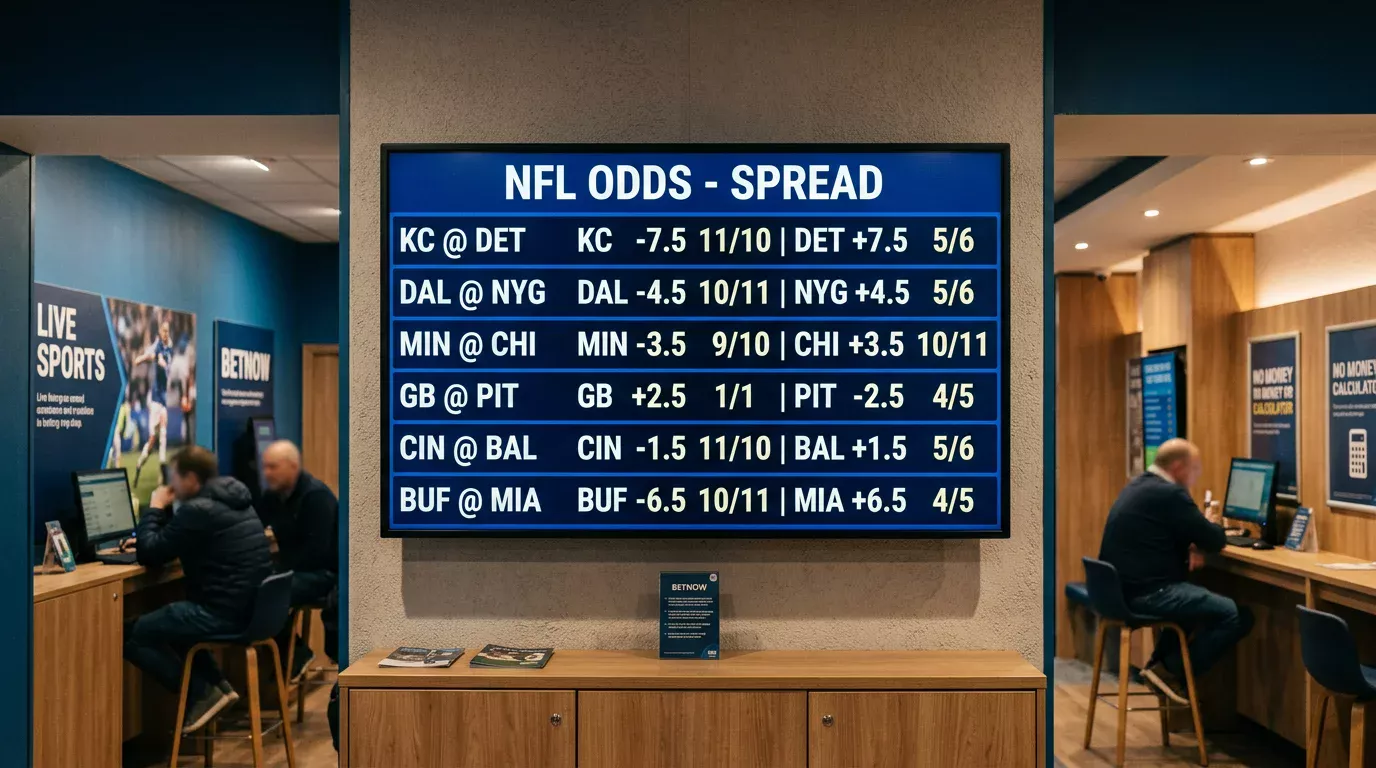
An alternate line is a bookmaker’s offer to move the standard spread or total in either direction in exchange for a price change. If the standard line is Eagles −3 at 10/11, the alternate ladder might offer −2.5 at 4/6 (you are selling half a point and paying juice for the worse number), or +3.5 at 6/4 (you are buying a half point and paying juice for the better number). Some UK books offer extensive ladders – spreads from −9.5 to +3.5 in half-point increments. Others offer a more limited range.
The pricing of these ladders follows a structural pattern. The rungs near the standard line carry small price changes per half-point. The rungs near key numbers – particularly 3 and 7 – carry disproportionately large price changes, because crossing a key number meaningfully shifts the cover probability. Understanding which rungs to climb and which to ignore is the entire skill of betting alternate lines.
Buying half-points around the 3 and the 7
The case for buying off the standard line exists only at two numbers: 3 and 7. The reason is mechanical. NFL final margins cluster at 3 (roughly 14% of games) and 7 (roughly 9%). Crossing those numbers changes your cover probability by a measurable amount – typically 5-7 percentage points for the 3 and 3-4 percentage points for the 7. Crossing other numbers, like the 4 or 5, changes cover probability by less than 1 percentage point because games rarely end on those margins.
The price the bookmaker charges to cross the 3 is the key question. A fair price for crossing the 3 – given the underlying 5-7 percentage point shift – should be a juice increase of roughly 10-14 cents in American odds, or a fractional shift from 10/11 to about 4/5. If the bookmaker is charging more than that – a shift to 4/6 or 1/2 – the move is overpriced and the expected value of buying the half-point turns negative. If the bookmaker is charging less, which sometimes happens during promotion windows, the move is fair or favourable. The 52.4% break-even threshold at 10/11 becomes something different at 4/6, and the punter has to recalculate accordingly.
Selling points for juice
The opposite move – taking −2.5 instead of −3 and getting a juice discount – is almost always a structurally bad bet. The bookmaker discounts the price to make the move attractive, but the discount never compensates for the dramatic loss of cover probability when you move across the 3. A move from −3 at 10/11 to −2.5 at evens looks like a generous offer; in reality the cover probability has dropped by 5-7 percentage points and the price improvement of about 4-5 cents nowhere near makes up for it.
The asymmetry between buying and selling is a structural feature of how alternate ladders are designed. The bookmaker prices the buy side aggressively to maximise revenue when punters chase better numbers. The bookmaker prices the sell side conservatively to make sure that bettors who take the worse number are reliably losing money over the long run. As one industry trading manager described the wider product expansion at UK books, suddenly customers had access to hundreds of new markets – and the alternate ladders are part of that expansion. The honest takeaway from a punter perspective is that the sell side of the ladder is where the bookmaker quietly makes the most money per unit of stake.
Alternate totals around 44 and 47
The alternate totals ladder follows the same logic as the spread ladder but with a different set of key numbers. NFL totals cluster more loosely than spreads – the modal totals over the last decade have been around 44 and 47, with smaller clusters at 41 and 51. Crossing those numbers on the alternate ladder changes the cover probability by 2-4 percentage points, less dramatically than crossing the spread 3.
The practical implication is that buying half-points on totals is generally a worse value proposition than buying half-points on spreads. The cover probability shifts are smaller, but the price charges are often similar in scale. The cleanest exception is a total sitting exactly on 44 or 47 in a game where multiple weather or pace factors suggest the under is undervalued. Buying down from 44 to 43.5 with a small juice increase can be a defensible move; buying down from 51 to 50.5 rarely is. The relationship between alternate totals and key numbers connects directly to the broader treatment of how NFL spreads cluster, which I have unpacked in our piece on NFL key numbers in point-spread betting.
Visit nfl sports betting stats for NFL spread alternatives.
UK availability and how the ladders price across books
UK availability of alternate lines varies materially across books. bet365 typically offers the deepest ladder, with spreads in half-point increments from extreme buy positions to extreme sell positions. Sky Bet and Paddy Power offer narrower ladders that cluster around the standard line. Betfair Exchange offers something different – peer-to-peer pricing on alternate lines that can sometimes be sharper than the traditional bookmaker ladders.
The price comparison work matters because the rungs are not standardised. A move from Eagles −3 at 10/11 to Eagles −3.5 at evens might be priced at evens on one UK book and at 11/10 on another. The 80% of NFL bettors who maintain accounts at two or more bookmakers have a structural advantage here that single-account punters do not. The 60% of NFL bettors who stake between £11 and £100 per wager give the bookmakers room to shade these prices in the volume zone – the small differences in juice across UK books are the difference between a structurally bad bet on one book and a defensible one on another. As one trading source put it about the recent Flutter platform consolidation, the suddenly broader market access has been a genuine change for customers – but the punter still has to do the work of comparing the prices, because the platform consolidation has not eliminated the price gaps between rival UK groups.
Is buying a half-point off +2.5 to +3 worth the juice on NFL spreads?
Only when the price increase is reasonable. A fair price for crossing the 3 – given the 5-7 percentage point shift in cover probability – should be a juice increase of roughly 10-14 cents in American odds, or a fractional move from 10/11 to about 4/5. If the bookmaker charges more than that – a move to 4/6 or 1/2 – the half-point is overpriced and the expected value of the buy turns negative. Check the price before the move.
Where do Paddy Power and bet365 list alternate NFL totals?
bet365 typically offers the deepest alternate totals ladder, with half-point increments stretching well above and below the standard total. Paddy Power and Sky Bet offer narrower ladders clustered around the standard line. Both groups list their alternate totals in the main NFL game markets section, with the alt ladder usually accessible via a dedicated tab or expansion link from the main total.
Prepared by the nfl Sports Betting Stats editorial staff.