NFL Prediction Markets: How Kalshi and Polymarket Compare to UK Sportsbooks
 Available in US
Table of Contents
- The first time a Kalshi screenshot landed in my inbox
- How an event contract is different from a moneyline bet
- What Kalshi and Polymarket actually offer on NFL
- Whether a UK resident can legally use these platforms
- Why the NFL itself is publicly worried about prediction markets
- What the prediction-market story means for UK punters

The first time a Kalshi screenshot landed in my inbox
About eighteen months ago, a punter in one of my networks emailed me a screenshot of a Kalshi NFL contract priced at 47 cents and asked, plainly, whether this thing was a sportsbook or not. I have spent more time than I would like thinking about that question since. The technical answer is that prediction markets are not sportsbooks. The practical answer, for a UK punter looking at a market with NFL on it, is that the line between an event contract and a moneyline price is getting thin enough to be confusing – and the regulatory consequences of that thinness are still unfolding in real time.
The AGA estimate of $30 billion in legal US NFL wagering for the 2025/26 season covers traditional sportsbook handle. Prediction-market volume sits outside that figure and is growing fast enough that the major US sports leagues, including the NFL, are publicly worried about it.
See also: nfl sports betting stats for the latest NFL data.
How an event contract is different from a moneyline bet
A traditional NFL moneyline bet works like this: you stake a sum at fractional odds offered by the bookmaker. If your side wins, the bookmaker pays the agreed return; if it loses, the stake is gone. The book sets the price, takes the risk on the result, and earns its margin through the overround built into the two-sided market.
A prediction-market event contract is structurally different. The market lists a binary outcome – for example, “Will the Eagles win the Super Bowl?” – and traders buy “Yes” or “No” shares at prices between zero and one dollar. A Yes share trades at 47 cents when the implied probability the market believes is around 47%. If the event resolves Yes, that share is worth one dollar. If it resolves No, it is worth zero. The price moves dynamically as buyers and sellers trade. There is no bookmaker setting a price; the market sets the price through trades. The platform earns through transaction fees, not by setting an overround.
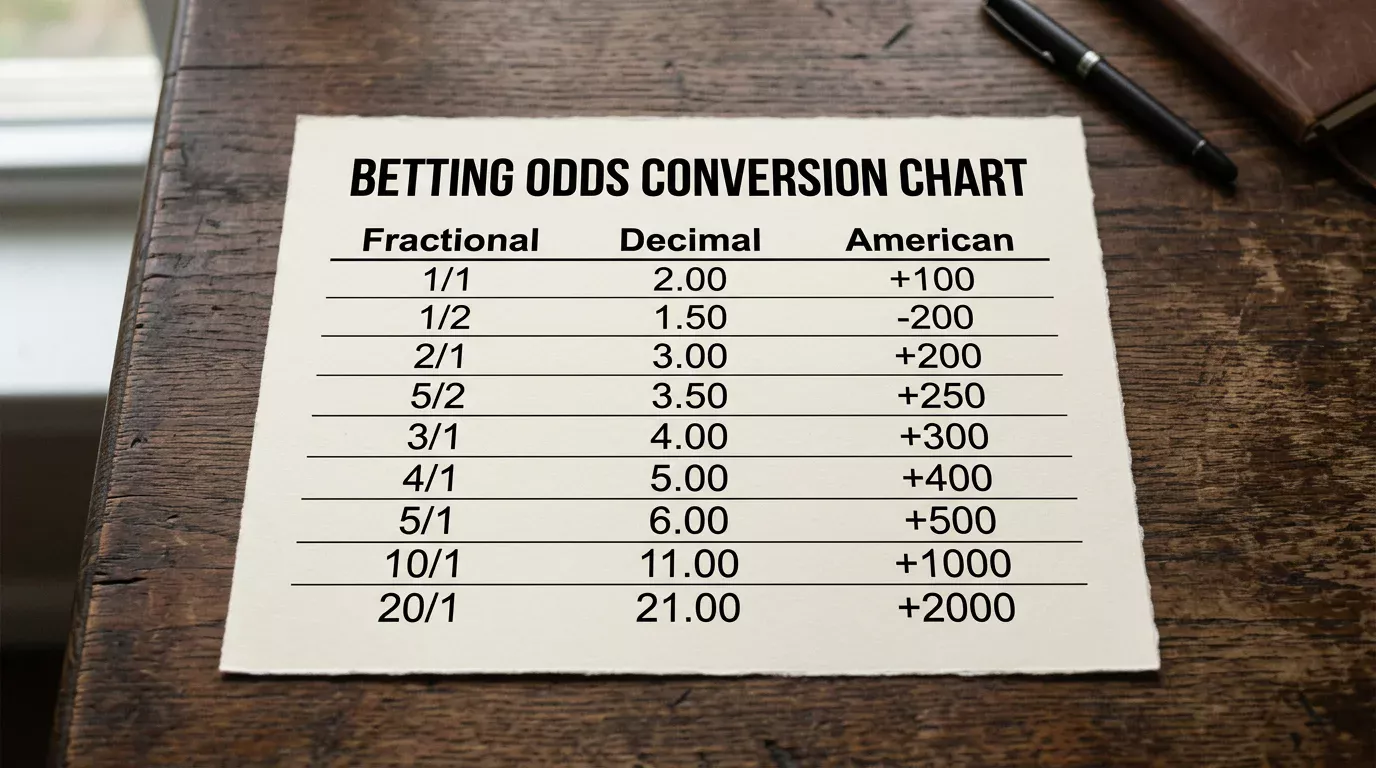
The functional similarity is obvious. A 47-cent Yes share is, for practical purposes, very close to a +112 American moneyline price or about 9/8 in fractional. The legal distinction is in how that price is created and who is on the other side.
What Kalshi and Polymarket actually offer on NFL
Kalshi is a US-regulated event-contract exchange that runs under the supervision of the CFTC. It lists NFL contracts on Super Bowl winners, conference winners, season win totals, and a growing roster of game-by-game outcomes. Polymarket operates as a peer-to-peer contract platform with NFL markets that range from outright winners to player-prop outcomes. Both platforms list contracts whose pricing converges closely to consensus sportsbook lines for the major markets.
The pricing efficiency on the headline markets is actually impressive. A Kalshi Super Bowl contract on a top contender will rarely diverge from the closing Vegas sportsbook price by more than a couple of percentage points. On smaller props and player futures, the divergence can be larger – sometimes because the prediction-market liquidity is thinner, sometimes because the contract structure is meaningfully different from the sportsbook product.
Whether a UK resident can legally use these platforms
This is the practical question most UK readers actually want answered, and the honest answer is: it is complicated and changing. Polymarket explicitly does not accept UK-resident accounts as a matter of platform policy. Kalshi’s terms restrict access primarily to US residents. UK punters who route around those restrictions are operating outside the platforms’ terms of service, outside the UKGC’s licensing framework – which oversaw the UK gambling market through a period when industry GGY climbed to £15.6 billion – and outside any consumer protections available through UK regulated channels.
The legal status of prediction markets has been hotly contested in the US itself. Some state regulators have argued that NFL contracts are functionally sports betting and require state licences; the CFTC has taken a different view. The dispute has produced ongoing court action. None of that is settled, and the UK side adds another layer of complication because UKGC-licensed gambling and CFTC-regulated commodity contracts are governed by entirely different frameworks. Most UK punters reading about prediction markets will conclude, sensibly, that the lower-friction option is using a UKGC-licensed UK book.
Why the NFL itself is publicly worried about prediction markets
The league has been increasingly vocal about its concerns regarding prediction-market integrity. As the NFL’s vice president of sports betting publicly put it in mid-2025, the worry is that without proper regulation these markets could be vulnerable to manipulation or price distortions. That is not a generic concern about gambling – it is a specific worry about the absence of the same integrity-monitoring infrastructure that has been built up around licensed sportsbooks over the last decade. The league’s investment in monitoring and education, which I have covered in more depth in our piece on NFL betting integrity monitoring, is currently designed around licensed bookmakers cooperating with the league’s security teams. Prediction-market operators have not historically been part of that cooperation in the same way.
There is also a more philosophical worry. Event contracts on player-prop-style markets – for example, “Will Patrick Mahomes throw for over 275 yards?” – could in theory be manipulated by someone with knowledge of injuries, game-plan changes, or other private information. Whether that risk is greater in prediction markets than in regulated sportsbooks is debatable, but the legal liability picture for handling such manipulation is much less defined in the contract-exchange context.
Compare prediction markets with NFL public betting splits for sharper reads.
What the prediction-market story means for UK punters
The honest practical takeaway is that prediction markets are not currently a meaningful access route for UK NFL bettors. The platforms do not accept UK accounts. UKGC-licensed books offer broadly similar markets at broadly similar prices, with consumer protections, deposit limits, and self-exclusion tools that the contract exchanges do not match. The interesting question for the next few years is whether prediction-market pricing – which is often very close to consensus sportsbook pricing on the major markets – will start to influence how UK books price their own NFL outright markets, particularly Super Bowl futures.
For now, the role of Kalshi and Polymarket in the UK NFL punter’s life is as a reference price, not a venue. When the prediction-market Super Bowl contract diverges meaningfully from your UK sportsbook’s fractional outright, that gap is informational. Most of the time, the gap is small. When it is large, it is worth understanding why before placing the bet.
Can UK residents legally trade NFL contracts on Kalshi or Polymarket?
Both platforms restrict access primarily to US residents under their own terms of service. Polymarket does not accept UK accounts as platform policy; Kalshi is structured around US-resident participation. UK residents routing around those restrictions operate outside the platforms’ terms, outside the UKGC’s licensing framework, and outside the consumer protections offered by UK regulated gambling. The practical option for UK punters is a UKGC-licensed UK book.
Are prediction-market NFL prices sharper than UK sportsbook lines?
On the major markets – Super Bowl outright, conference winner, season win totals on contender teams – prediction-market pricing converges closely with consensus sportsbook lines, often within one or two percentage points of implied probability. On smaller props and less liquid markets, the divergence can be larger, sometimes because the contract structure differs and sometimes because liquidity is thinner. They are not consistently sharper, but they are not consistently softer either.
Prepared by the nfl Sports Betting Stats editorial staff.