NFL Betting Integrity: How the League Catches Suspicious Wagers in 2026
 Available in US
Table of Contents
- The spring three years ago when ten players got suspended
- The Global Security Operations Center and what it actually does
- The 2023-24 suspension wave and what it revealed
- Prop bet vulnerability and why it concerns the league
- Mandatory policy education in 2024 and what it changed
- What UK punters should take from all this

The spring three years ago when ten players got suspended
Three NFL springs ago, the league suspended ten players over a single three-month window for violations of the gambling policy. The story barely made the UK headlines but it rattled the betting industry on both sides of the Atlantic. The suspensions were not a coincidence; they were the visible output of a monitoring infrastructure that the league had been building for half a decade. Watching that story unfold taught me something I had not fully appreciated: the modern NFL betting market is not just bookmakers and punters anymore. It is bookmakers, punters, the league’s security operation, and increasingly the federal authorities working in coordination. After seven years of tracking this market, the integrity story matters more to the long-term health of UK NFL betting than most casual punters realise.
The simple math is that punters benefit when integrity holds. A market vulnerable to manipulation loses trust, and a market that loses trust loses liquidity, and a market that loses liquidity becomes less efficient and worse-priced.
See how integrity systems flag activity in NFL prediction markets.
The Global Security Operations Center and what it actually does
The NFL’s Global Security Operations Center, located in the league’s headquarters, runs the monitoring infrastructure that watches betting markets around every NFL game. Integrity representatives – former FBI agents, retired police executives, and intelligence professionals – have been embedded with every team since 2018, with the formal monitoring architecture expanding aggressively after the US Supreme Court opened the door to state-level sports betting.
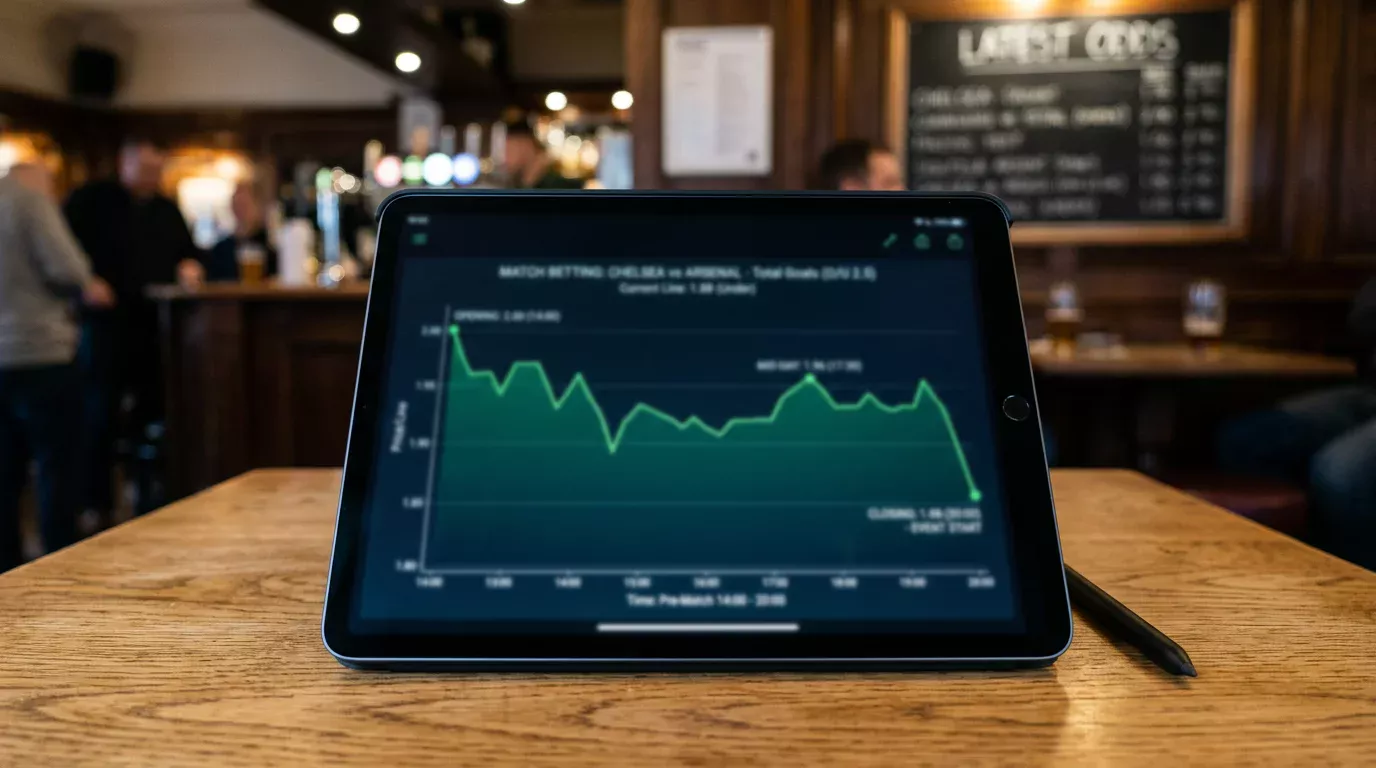
The monitoring works through real-time data feeds from regulated US sportsbooks and from integrity-monitoring contractors. Unusual betting patterns – sudden line movements without obvious news catalyst, heavy single-side action on prop markets, anomalous activity on player-specific bets – trigger alerts. The league then investigates with the relevant sportsbook to determine whether the anomaly has a legitimate explanation or whether it requires escalation. The volume of alerts that turn out to be benign is high, but the system is calibrated to over-flag rather than under-flag, on the principle that a missed manipulation is more damaging than a false positive.
The 2023-24 suspension wave and what it revealed
The 2023 suspension wave involved ten players over a three-month spring-summer period. The violations ranged from players betting on NFL games while active in the league (a strict policy violation regardless of whether the player bet on his own team) to players placing bets through other parties to circumvent the policy. None of the disclosed cases involved match-fixing or game manipulation, but several involved players betting on their own team’s games – a category the league treats as the most serious because of the potential for inside information to affect the bet.
The suspensions revealed two things. First, the monitoring system was identifying violations that the players had assumed were undetectable. The integrity infrastructure had matured to the point where small bets placed through sportsbook accounts in jurisdictions adjacent to where the player lived were being traced. Second, the league’s gambling policy education in earlier years had been less effective than the league believed. Players were violating rules they apparently did not fully understand, which prompted the 2024 mandatory in-person policy education programme.
Prop bet vulnerability and why it concerns the league
The integrity vulnerability that gets the most public attention from the league is prop bets. The reasoning is straightforward: a player has substantially more control over an individual prop outcome – his own passing yards, his own anytime touchdown, his own receptions – than over the outcome of an entire game. A quarterback who agreed to throw under a certain yardage line could plausibly hit that target in a way that would not affect the team’s win or loss. A receiver who agreed not to score his first target could absorb the resulting impact without his team noticing.
The league’s vice president of sports betting has been publicly clear about the concern, warning that markets without proper regulation could be vulnerable to manipulation or price distortions. The concern applies to traditional sportsbook props but applies more sharply to prediction-market-style contracts that operate outside the regulated bookmaker integrity infrastructure. The companion piece on NFL prediction markets and how Kalshi compares to UK sportsbooks covers the prediction-market angle in detail, but the relevant integrity point here is that the league’s monitoring relationship with regulated sportsbooks is much tighter than its relationship with contract exchanges.
Mandatory policy education in 2024 and what it changed
Before the 2024 NFL season, gambling-policy education for players had been delivered through online modules and optional sessions. Following the 2023 suspension wave, the league made in-person training mandatory for every player, with detailed walkthroughs of what was permitted, what was prohibited, and what the consequences of violations actually looked like in practice.
The 2024 mandatory training is too recent to evaluate fully – the violation pattern in 2024 and 2025 was lower than 2023 but the sample is small and the deterrent effect is hard to separate from the natural cooling after a high-profile enforcement wave. What is clear is that the league’s investment in education was substantial and that the policy framework around player gambling is now more clearly communicated than at any previous point in NFL history. As one league security executive described the monitoring approach to the press, the integrity team is looking for any anomaly, anything that stands out, anything that could raise concerns. That is the spirit of the operation. The execution has tightened over the last three years and is likely to keep tightening as the regulated betting market expands.
Explore nfl sports betting stats for NFL market integrity.
What UK punters should take from all this
The integrity infrastructure affects UK punters in three indirect ways. First, the regulated US sportsbooks that participate in the monitoring system also feed line data to global betting markets, including UK books. Sharp line movements driven by integrity-flagged action propagate quickly to UK pricing, which means UK punters indirectly benefit from the monitoring without paying for it.
Second, the league’s growing wariness about prop bets has slowed the expansion of certain prop categories, particularly player-specific contracts at very granular levels. UK bookmakers tend to follow the league’s lead on these product decisions, which means the UK market structure for NFL props is shaped by US integrity considerations even though the UK has its own regulatory framework. The connection to broader regulatory questions in the UK – UKGC oversight, statutory levy, affordability checks – is covered in our piece on UKGC safer-gambling rules for NFL bettors, but the integrity story is fundamentally a North American story that ripples outward.
Third, and most practically, the existence of the monitoring infrastructure means UK punters can place bets on regulated UK sportsbooks with reasonable confidence that the underlying game outcomes are not being manipulated. That confidence is the foundation of any functional betting market. Without it, the implied probabilities the bookmaker prices are theoretical; with it, they are meaningful. The trust premium built into the modern NFL betting market is the reason the AGA’s $30 billion handle projection for the 2025/26 season looks plausible. A market plagued by manipulation concerns would be a fraction of that size.
How many NFL players were suspended for gambling violations in 2023?
The league suspended ten players over a three-month spring-summer 2023 window for violations of the gambling policy. The violations ranged from active players betting on NFL games – a strict policy violation regardless of which team was bet on – to players placing bets through other parties to circumvent the policy. None of the disclosed cases involved match-fixing or game manipulation.
Why are NFL prop bets considered an integrity weak spot?
Because individual players have substantially more control over a prop outcome – passing yards, anytime touchdowns, receptions – than they do over the outcome of an entire game. A player who agreed to under-perform a specific prop could plausibly hit that target without affecting the team’s chance of winning. The integrity concern applies more sharply to player-specific props and to prediction-market contracts than to standard spread or moneyline bets, because the manipulation surface is structurally larger on granular prop markets.
Published by the nfl Sports Betting Stats team.